
ours journey 1024x427.jpg

Tag: tree removal cost sydney

Emergency Tree Removal Sydney: What to Do When a Tree Comes Down

Emergency Tree Removal Sydney: What to Do When a Tree Comes Down

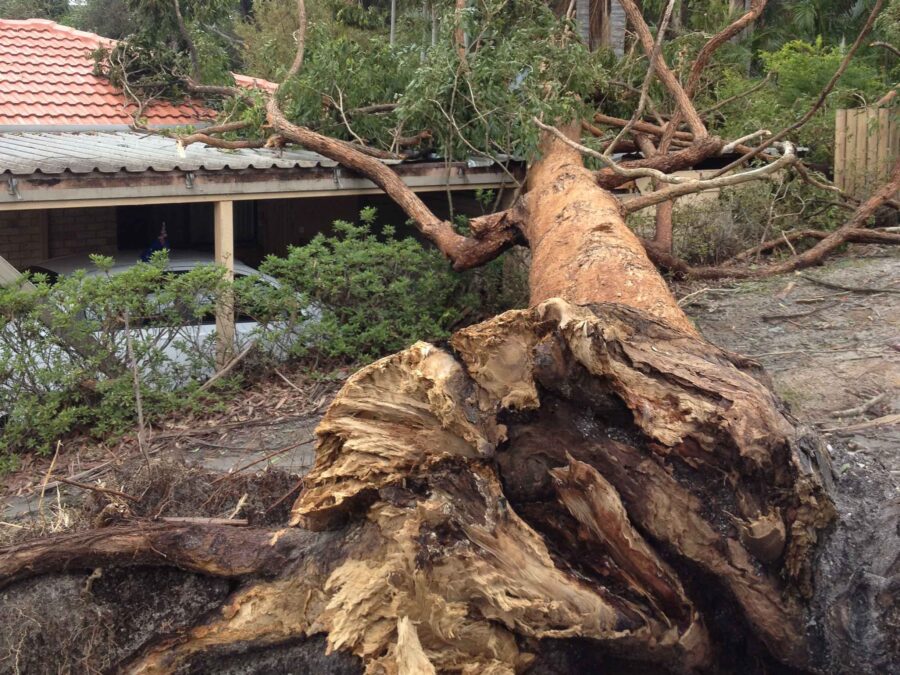
Sydney’s storm season is short and violent. An east coast low or a summer supercell can drop hundreds of trees across the basin in a single afternoon. When one of them lands on your roof, your car or your power supply, the decisions you make in the first hour matter more than anything that happens afterwards.

This guide sets out exactly what to do, who to call in what order, what emergency tree removal Sydney services can and cannot do, and how to keep your insurance claim clean.

First Hour: The Safety Checklist

1. Get everyone clear

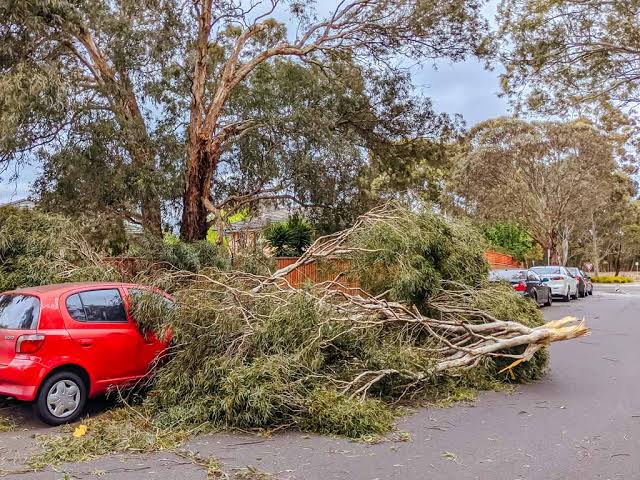
Evacuate the area beneath and around the tree, including inside the house if a limb has come through a roof. Damaged trees continue to move and settle for hours after the initial failure.

2. Assume every wire is live

If the tree is touching or near power lines, stay at least eight metres away and keep everyone else away. Do not touch the tree, the fence it is resting on, or any wet ground nearby. Call the electricity network provider immediately. No emergency tree removal Sydney operator will touch that tree until the network has made it safe.
Emergency Tree Removal Sydney: What to Do When a Tree Comes Down

3. Call the right service

  • Immediate danger to life: 000
  • Tree on a house, or blocking a road: NSW SES on 132 500
  • Tree on or near power lines: your network provider’s emergency line
  • Tree down but no immediate hazard: a private emergency tree crew
  • Tree on a nature strip or council land: your local council

The SES will make a site safe and tarp a roof. They generally will not perform full removal or clean-up. That is where private crews come in.

4. Document everything

Before anything is moved, photograph the tree, the damage, the surrounding area and the weather conditions. Video is better. Insurers will ask, and photos taken after the clean-up are worth far less.

5. Prevent further damage

Your policy almost certainly requires you to take reasonable steps to limit further loss. Tarping an open roof, moving valuables, and turning off power at the mains to affected areas all count.

What Counts as an Emergency

Not everything needs an after-hours callout at double rates.

Genuine emergencies:

  • A tree or major limb on a house, garage, car or fence
  • A tree contacting or resting on power lines
  • A tree blocking a driveway, road or emergency access
  • A visibly failing tree: fresh lean with soil heaving, or a cracked major union
  • A hung-up limb suspended in the canopy over a used area

Not emergencies (book normally and save money):

  • Deadwood high in a canopy over a rarely used corner
  • A tree you have decided you dislike
  • A stump
  • Storm debris on the lawn

Being honest about which category you are in is the easiest way to reduce your emergency tree removal Sydney bill.

How Emergency Crews Work

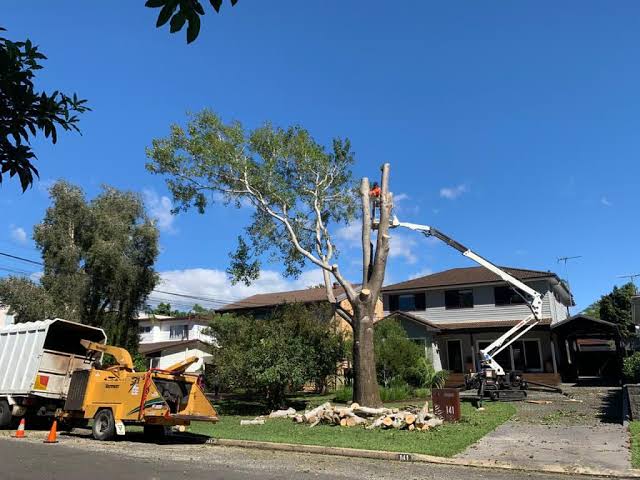
A storm response job is not a scaled-down normal removal. It is a different discipline.

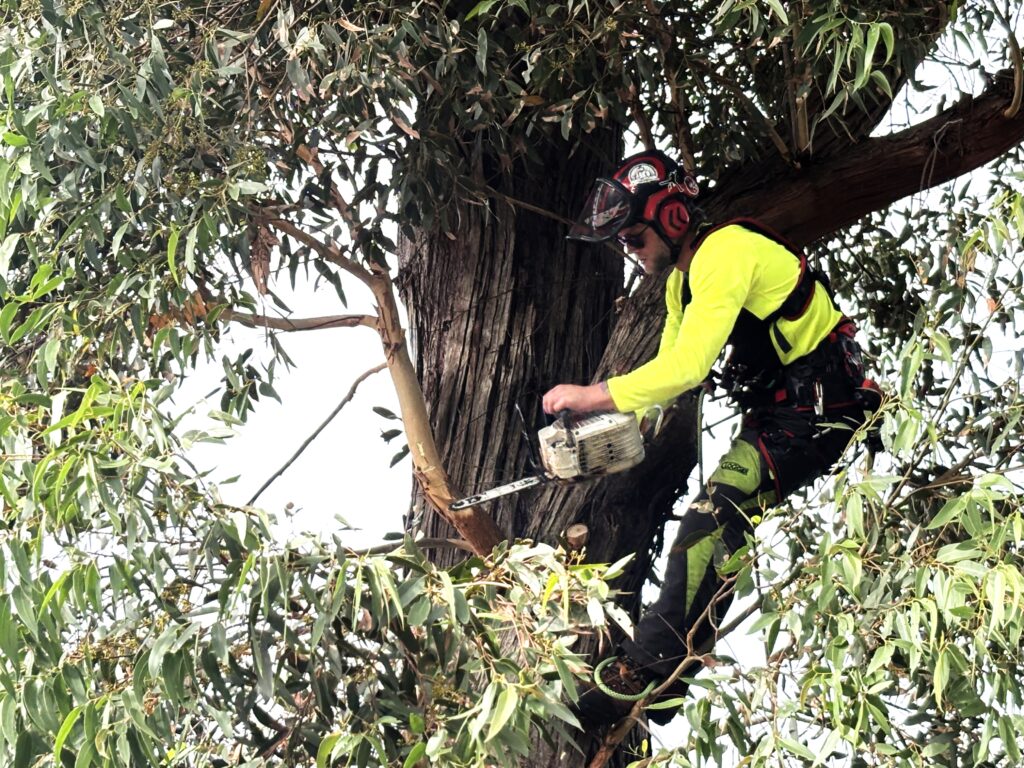
Storm-damaged trees are under stored tension. Bent stems, hung-up limbs and partially uprooted trunks contain enormous stored energy that releases unpredictably when cut. Crews assess load paths first, then release tension progressively, often using winches, cranes and cut sequences designed to control the spring.

On a house strike, the sequence is usually: stabilise and secure the limb, remove weight from the structure in controlled sections, tarp the opening, then clear the remainder. Rushing that order is how a bad situation becomes a worse one.

What It Costs

Emergency rates reflect after-hours labour, immediate mobilisation and elevated risk.

  • After-hours callout fee: $300 to $800
  • Emergency hourly rate, three-person crew: $300 to $600
  • Tree on a house, make-safe only: $1,500 to $4,000
  • Full removal and clean-up after a house strike: $4,000 to $15,000
  • Crane-assisted lift off a structure: add $2,000 to $6,000
  • Temporary roof tarping: $300 to $1,200

Same-day but in-hours work usually costs 30 to 50 percent less than a 2am callout. If the site is safe and secured, waiting until morning is a legitimate saving.
Emergency Tree Removal Sydney: What to Do When a Tree Comes Down

Insurance: Getting the Claim Right

Most Australian home policies cover:

  • Damage to insured structures caused by a fallen tree
  • Removal of the tree from the damaged structure
  • Debris removal where it is part of repairing the damage
  • Temporary accommodation if the home is uninhabitable

Most policies do not cover:

  • Removal of a fallen tree that damaged nothing
  • Preventative removal of a hazardous but standing tree
  • Damage from a tree that failed because of documented neglect
  • Landscaping and garden restoration

Practical steps: notify your insurer before authorising major works, keep every invoice and photograph, get the make-safe done immediately (that is nearly always covered), and ask the emergency tree removal Sydney contractor for a written report describing the failure. That report is often the difference between a paid and a disputed claim.

Whose tree, whose problem?

If a neighbour’s tree falls on your property, liability generally turns on negligence: did they know, or should they have known, that the tree was hazardous? A healthy tree brought down by an extreme storm is usually treated as an act of nature, and each party claims on their own policy. If you had previously put concerns in writing, your position is much stronger.

Preventing the 2am Phone Call

Almost every storm failure is predictable in hindsight. The warning signs are consistent:

  • Deadwood in the upper canopy
  • Fungal brackets at the base or on major limbs
  • Cavities, cracks or included bark at branch unions
  • Recent lean with soil lifting on the opposite side
  • Heavy end weight on long horizontal limbs
  • Root damage from trenching, paving or excavation
  • Excessive epicormic regrowth after a previous bad lop

Book a structural assessment every three to five years and deadwood before summer. A $600 autumn prune is cheaper than a $12,000 emergency tree removal Sydney callout plus an insurance excess.

Bushfire Zones and the 10/50 Scheme

If you live near bushland, the NSW Rural Fire Service 10/50 Vegetation Clearing Scheme may allow you to remove trees within 10 metres of your home and clear underlying vegetation within 50 metres, without council approval, provided your property sits in a designated entitlement area. Check the official RFS tool on the day you intend to clear, because entitlement areas and rules change. Macquarie University research on Sydney urban tree shade is useful context when deciding what canopy to retain.
Tree Removal Cost Sydney: A 2026 Price Guide That Doesn't Waste Your Time

Tree Removal Cost Sydney: A 2026 Price Guide That Doesn’t Waste Your Time

Ask three companies to quote the same tree and you can easily get $900, $2,400 and $4,800. That spread makes people assume someone is ripping them off. Usually nobody is. Tree removal cost Sydney wide is driven by variables that are invisible from the footpath: access, rigging complexity, disposal volume and risk exposure.

This guide breaks down what you should actually pay, what legitimately moves a price, and how to compare quotes that look nothing alike.

The Headline Numbers

Indicative 2026 pricing for the Sydney metropolitan area, all inclusive of green waste removal but excluding stump grinding:

Tree sizeTypical heightPrice range
SmallUnder 5m$400 – $900
Medium5 – 10m$900 – $1,800
Large10 – 15m$1,800 – $3,500
Very large15 – 25m$3,500 – $8,000
Extra large gum/fig25m+$8,000 – $20,000+

Add-ons:

  • Stump grinding: $120 – $900 depending on diameter
  • Crane hire: $1,500 – $4,000 per day
  • Elevated work platform: $600 – $1,500 per day
  • Traffic control / road permit: $500 – $1,500
  • Arborist report for council: $400 – $2,500
  • After-hours emergency callout: 1.5x to 2.5x standard rates
Tree Removal Cost Sydney: A 2026 Price Guide That Doesn't Waste Your Time

The Seven Factors That Move a Quote

1. Access

The biggest single multiplier. A tree beside a wide driveway where the chipper can park within ten metres might cost half what the identical tree costs in a rear courtyard reached through the house. Every metre of hand-carry is labour.

2. Proximity to targets

A tree in an open paddock can be felled in one cut. The same tree between a house, a pool and a neighbour’s glass conservatory must be dismantled piece by piece, with every limb roped and lowered. That can triple the tree removal cost Sydney contractors quote.

3. Height and trunk diameter

Volume scales roughly with the cube of size. A tree twice as tall is not twice the work, it is closer to six times the material.

4. Species and wood density

Ironbark, turpentine and mature figs are dense, heavy and slow. Poplar and pine cut fast. Fig root plates in particular add serious stump cost.

5. Power lines and services

Work within the approach distances to overhead conductors requires accredited operators and sometimes a network shutdown. That adds cost and lead time, but SafeWork NSW rules on it are non-negotiable.

6. Disposal volume

Tip fees for garden organics are charged by tonne. A large hardwood produces multiple tonnes. Some operators offset this by selling firewood or mulch, which is why they can quote lower. 7. Permits and reporting

If council consent is required, someone has to prepare and lodge the application. Check Service NSW’s current t ree-removal approval guidance, then factor in the arborist report and a 4 to 8 week approval wait.

What Should Be Included in the Price

A complete quote covers: felling or dismantling, all rigging, cutting to manageable lengths, chipping of brush, removal of all timber and debris, raking and blowing down the site, disposal at a licensed facility, and public liability insurance.

Commonly excluded and worth confirming in writing: stump grinding, removal of grindings, backfill soil, turf repair, fence panel removal and reinstatement, crane hire, traffic control, and council application fees.

Most disputes about tree removal cost Sydney homeowners experience come from these exclusions, not from the headline number.

Why the Cheapest Quote Is Usually the Expensive One

If one quote is 50 percent below the others, something is missing. Common explanations:

  • No public liability insurance. If a limb goes through the neighbour’s roof, that becomes your civil problem.

No workers compensation. An injured uninsured worker on your property is a serious exposure.

•• Illegal dumping. Under NSW law both the waste owner and the transporter must prove the waste reached a place that can lawfully accept it. Cheap disposal is often no disposal.

  • Debris left on site. “Removal” that means the tree is on the ground, not gone.
  • No permit check. You wear the fine, not them.
  • Cash only, no ABN, no paperwork. No recourse when something goes wrong.

Always ask for a certificate of currency and check the expiry date. It takes two minutes and it is the highestvalue thing you can do.

Tree Removal Cost Sydney: A 2026 Price Guide That Doesn't Waste Your Time

How to Compare Quotes Fairly

Give every contractor the exact same brief. Written scope, same trees, same expectations about stump and waste. Then compare on these lines:

  1. Is the stump included, and to what depth?
  2. Is all timber removed, or just chipped brush?
  3. Is the price fixed or subject to variation?
  4. What is the crew size and expected duration?
  5. What equipment is being used, and is hire included?
  6. What insurance is held, and can they produce the certificate?
  7. Who lodges the council application?
  8. What is the deposit and payment schedule?

Asking these eight questions will explain almost any tree removal cost Sydney quote spread you encounter.

Ways to Legitimately Reduce the Price

  • Bundle jobs. Multiple trees in one visit dramatically reduce per-tree cost, because mobilisation is a fixed cost.
  • Keep the timber. Ask them to leave rounds for firewood and chip for mulch. Less disposal volume, lower price.
  • Improve access. Take a fence panel off yourself. Move the cars. Clear the side path.
  • Go off-peak. Winter and early autumn are quieter than post-storm periods.
  • Coordinate with neighbours. If several properties on a street need work, negotiate a group rate.
  • Skip the cosmetic extras. Turf repair and soil backfill are cheaper to do yourself.

Insurance and Who Pays

Home insurance generally covers removal of a tree that has already fallen and damaged an insured structure. It generally does not cover preventative removal of a living tree, removal of a fallen tree that damaged nothing, or trees that failed due to neglected maintenance. Read your PDS before assuming.

If a neighbour’s tree damages your property, liability turns on whether they knew or should have known the tree was hazardous. Research from the University of Queensland on street-tree value is useful context when weighing removal against retention. Documented notice matters, which is another reason a written arborist assessment is worth the money.

Powered by WordPress & Theme by Anders Norén